
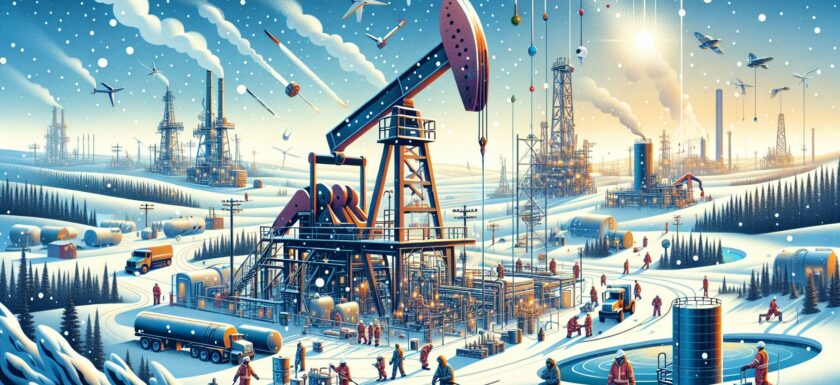
The oil and gas industry in Canada has long been a key player in the country’s economy. With vast reserves of oil and gas, Canada has positioned itself as a significant global energy supplier. However, this sector faces a myriad of challenges and uncertainties, including environmental concerns, fluctuating oil prices, and the emergence of renewable energy sources. In this article, we will delve into the intricacies of the oil and gas industry in Canada, exploring its impact on the economy, the environment, and the future.
Economic Significance and Job Creation
The oil and gas industry in Canada has been a crucial driver of the country’s economy for decades. It contributes significantly to Canada’s gross domestic product (GDP) and accounts for a substantial portion of the government’s revenue. According to a report by the Canadian Association of Petroleum Producers, the oil and gas sector contributed $117 billion to Canada’s GDP in 2019 alone.
Moreover, this industry plays a pivotal role in job creation, providing employment opportunities across various sectors. From engineers and geologists to workers in the transportation and logistics fields, the oil and gas industry employs a diverse workforce. In fact, it is estimated that around 500,000 Canadians are employed directly or indirectly by this sector.
Environmental Concerns and Mitigation Efforts
While the economic benefits of the oil and gas industry are undeniable, it is vital to address the environmental concerns associated with its activities. The extraction, processing, and transportation of oil and gas can have negative impacts on ecosystems, air quality, and water resources.
In recent years, there has been a growing emphasis on environmental sustainability and carbon emissions reduction. As a result, the oil and gas industry in Canada has been striving to mitigate its environmental footprint. Companies have been investing in innovative technologies to reduce greenhouse gas emissions, improve energy efficiency, and promote responsible resource management.
Market Volatility and Price Fluctuations
The oil and gas industry is notorious for its market volatility and price fluctuations. Oil prices are influenced by geopolitical factors, global demand, and supply dynamics. In recent years, Canada has faced challenges due to low global oil prices, impacting the profitability of the industry and the overall economy.
To overcome this volatility, the Canadian oil and gas sector has been focused on diversifying its export markets. Traditionally, Canada heavily depended on the United States as its primary export destination. However, efforts have been made to expand market access by seeking new trade partnerships and exploring alternative transportation routes, such as pipelines to coastal areas for export to international markets.
The Rise of Renewable Energy
The emergence of renewable energy sources poses both opportunities and challenges for the oil and gas industry in Canada. As the world transitions towards cleaner energy alternatives, Canada faces the need to adapt and diversify its energy portfolio.
The Canadian government has been actively supporting the development of renewable energy projects, such as wind and solar power. These initiatives aim to reduce greenhouse gas emissions and lessen reliance on fossil fuels. However, the transition towards renewable energy sources is gradual, and the oil and gas industry continues to play a critical role in meeting the country’s energy needs.
The Path Ahead: Balancing Growth and Sustainability
As the oil and gas industry in Canada navigates through a complex landscape of economic, environmental, and technological changes, finding a balance between growth and sustainability is paramount.
The sector must continue to innovate and adopt cleaner technologies to minimize its environmental impact. Simultaneously, it should invest in research and development to explore new energy sources and diversify its offerings. Collaboration between industry, government, and stakeholders will be crucial in driving sustainable growth and ensuring a prosperous future for the Canadian oil and gas industry.
In conclusion, the oil and gas industry in Canada is a vital pillar of the country’s economy. It contributes significantly to job creation, GDP, and government revenue. However, it also faces challenges in terms of environmental sustainability, market volatility, and the rise of renewable energy sources. By embracing innovative approaches, mitigating environmental concerns, and diversifying its energy portfolio, the industry can adapt to the evolving global energy landscape and pave the way for a sustainable future.